Healthcare data phishing is surging across the United States. Scammers have recently used MyChart’s name to access trusted patient portals, sending fake emails that promise free Medicare kits or urgent medical results. Victims who click end up on cloned sign-in pages that steal login details, install malware, and harvest credit card information. More than 40 health systems have issued public warnings in recent weeks.
A wave of fraudulent emails is sweeping across American healthcare. The messages look official. They carry familiar logos, mimic real portal branding, and arrive at exactly the moment a patient might expect a message about test results or Medicare benefits. Behind the polished appearance sits a criminal operation designed to steal protected health information (PHI) and drain bank accounts.
Security investigations in summer 2026 exposed the scale of the problem. Epic’s MyChart, one of the most widely used patient portals in the country, confirmed a sharp rise in scammers exploiting its brand. Dozens of hospitals followed with urgent alerts. This surge signals a broader crisis in digital healthcare, where the digitization of medical records has created both convenience and fresh vulnerability.
This report breaks down how these attacks work, why they succeed so often, and what patients and providers must do to fight back.
The Alarming Surge in Healthcare Data Phishing
Healthcare data phishing has exploded across the country. More than 40 health systems, spanning states from Florida to Hawaii, warned patients about a single coordinated scam campaign in August 2026. Recently started from MyChart’s impersonification, the list grows daily as more organizations report identical fraudulent messages hitting their patients. By August 27, 2026, at least 41 U.S. health systems had warned patients about MyChart-related phishing scams, according to Becker’s Hospital Review.
“Scammers sometimes try to trick patients by using the MyChart name or logo to make emails, text messages, phone calls, and websites look official. Some might try to steal your login information or promise free gifts if you enter payment details. A few simple habits go a long way towards keeping you safe. Always remember: stop and check if it doesn’t feel right”, MyChart cited.
“Epic’s MyChart has shared examples from potential phishing schemes observed as recently this month that include email messages linking to a fake MyChart website displaying erroneous medical records and others notifying of a free “2026 Medicare Health Kit.” MyChart provided recommendations for healthcare organizations and patients to help prevent or mitigate impacts from potential scams. The company announced last month that it has witnessed an uptick in scammers using the MyChart name or logo to create deceptive emails, text messages, phone calls and websites that appear official,” AMA recently announced in their post.
Scammers picked healthcare for a reason. Data suggests healthcare organizations face higher phishing success rates than any other major industry sector. Patients trust their providers. That trust becomes a weapon when criminals wear a familiar disguise.
Artificial intelligence has poured fuel on the fire. AI now lets cybercriminals produce a high volume of convincing phishing messages in minutes. Grammar improves. Branding sharpens. The volume climbs. Epic’s director of research and development, Trevor Berceau, clarified that the rise reflects scammers exploiting portal popularity rather than a breach of the portal itself.
The move away from paper toward digital systems changed the threat landscape entirely. As providers completed the transition from paper records to electronic health records, patient data moved online, accessible through logins that criminals now hunt aggressively.
Read More >> Security, Fraud Prevention & Compliance in Healthcare: Key Priorities for Medical Billing Systems
How Healthcare Data Phishing Schemes Actually Operate
Cybercriminals build these scams with care. They copy official logos, colors, wording, and website layouts until the fraud looks indistinguishable from the real thing. Then they craft a message with a hook.
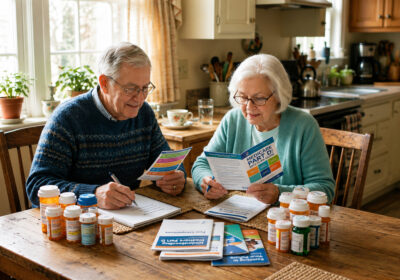
Two campaigns dominated the 2026 wave. One dangled a free “2026 Medicare Health Kit” or “Senior Health Package.” offered by MyChart. The other claimed that recent test results were ready to view.
The Fake Results Trap Using MyChart’s Name
One campaign sent an email announcing that medical results were ready. The link led to a cloned sign-in page. After a patient typed in login details, the fake portal displayed fabricated medical information alongside an urgent bloodwork warning.
Next came the real damage. The site instructed users to press Windows+R, paste a command, and hit Enter. That single action installed malware. An August variation offered a downloadable file named Full_Analysis_Report.exe and told users to bypass their own Windows security warning.
The Free Medicare Kit Bait
The second campaign promised a free health kit by MyChart. Links bounced through unrelated advertising sites before landing on a portal-branded survey topped with a countdown clock. The clock created pressure. The survey then requested personal details, a shipping payment, and full credit card information.
Legitimate portals do not run giveaways. That fact alone exposes the scam, yet the urgency and polish fool many recipients.
Read More >> The Hidden Risks of AI in Healthcare: Ensuring PHI Security Amid Data Explosion
Common Tactics Behind Healthcare Data Phishing Messages
Scammers rely on a predictable playbook. Spelling errors and awkward phrasing often slip through, signaling a fraudulent message. Unsolicited free offers create urgency, pushing recipients toward hasty decisions before they think twice.
Sender addresses look almost right. A single altered character separates the fake from the genuine. Criminals count on busy patients skimming past that detail.
Fake CAPTCHA screens add another layer of deception. Known as ClickFix attacks, these present harmful computer commands as a routine “human verification” step. A genuine CAPTCHA never asks anyone to open a command window, paste text, or disable security settings.
The Real Damage to Patient Privacy and Data Security
Stolen PHI opens the door to serious harm. Criminals use it for identity theft and fraudulent medical billing, running up charges under a victim’s name and insurance. Cleaning up that mess can take months.
Compromised records carry a hidden danger. False entries in a medical file can lead to incorrect diagnoses and dangerous treatment complications. A patient’s health record, not just their wallet, ends up at risk.
The consequences ripple outward. A March 2026 incident in Connecticut showed what attackers accomplish after obtaining valid credentials. An unauthorized party used compromised employee logins to access payment accounts and download files on roughly 22,500 people. The exposed data included names, Medicaid claim identifiers, service descriptions, billing information, and insurance details.
Credential theft on a larger scale demonstrates the appetite for this data. In September 2025, Microsoft disrupted a phishing service that had targeted at least 20 U.S. healthcare organizations and stolen at least 5,000 credentials worldwide. Patients lose control over sensitive health and financial information the moment their login lands in the wrong hands.
Red Flags That Expose Healthcare Data Phishing Attempts
Certain warning signs appear again and again. Spotting them protects your data.
- Credential requests: Legitimate portals rarely ask you to verify a password or change account credentials through an email link.
- Manufactured urgency: Pressure to act immediately, often reinforced with a countdown clock, signals manipulation.
- Generic greetings: A real provider usually addresses you by name rather than opening with “Dear Patient.”
- Mismatched links: Hover over any link. If the web address does not match the organization’s official domain, delete the message.
- Unexpected free offers: Legitimate healthcare portals do not run giveaways or mail free kits.
- Command instructions: No genuine portal will ever ask you to press keyboard shortcuts, paste commands, or download an executable file.
Practical Protection Strategies for Healthcare Consumers
Defending your protected health information starts with a few solid habits. Verify the sender’s full email address before clicking anything. A quick glance often reveals a suspicious domain.
Reach out to your provider directly when a message feels off. Use a phone number or official website you already trust, not the contact details inside the suspicious email. When in doubt, open the portal through its official app or a bookmarked address.
Guard your credentials with care. Never share passwords or personal information through email or text. Enable multi-factor authentication on every healthcare portal account, adding a second lock that stops thieves even when they steal your password.
If a message announces test results, log in through your saved portal link rather than the email. Efficient solutions for medical record access already exist inside the real app. You never need a mystery link to view your own health data.
What Healthcare Organizations Must Do Now
Providers carry a heavy responsibility in this fight. Strong defenses start with people. Employee training programs on phishing recognition turn staff into a human firewall, teaching them to spot deception before it spreads.
Technology reinforces that human layer. Advanced email filtering and threat detection systems catch malicious messages before they reach an inbox. Continuous monitoring for unauthorized access attempts and suspicious account activity flags trouble early, often before real damage occurs.
Clear communication protects patients too. Organizations should establish and publish exactly how they contact patients for legitimate alerts. When patients know what a real message looks like, fakes stand out. The shift toward HIPAA compliant electronic medical records and cloud based electronic medical records makes these safeguards non-negotiable, since a single compromised login can expose thousands of records.
Sound records management underpins every defense. Automating medical records to save time and reduce errors works only when the systems holding that data stay locked down.
The Future of Healthcare Cybersecurity
The threat will not fade on its own. Healthcare providers must adopt zero-trust security frameworks, where no user or device earns automatic trust and every access request faces verification. This approach limits the damage a single stolen credential can cause.
Collaboration strengthens the whole industry. Continuous monitoring paired with threat intelligence sharing lets organizations warn each other the moment a new campaign appears. The rapid, coordinated warnings during the 2026 portal scam showed this cooperation in action.
Patient education remains the frontline defense. As the future of electronic health records unfolds, informed patients become the hardest target for criminals to crack. A well-trained public, backed by vigilant providers, forms the strongest shield against healthcare data phishing.
Staying One Step Ahead of the Scammers
Healthcare data phishing has reached a boiling point, and the pressure will only grow as criminals sharpen their tools with AI. Yet the defense is refreshingly practical. Slow down. Verify the sender. Reach your provider through trusted channels. Turn on multi-factor authentication. These simple steps stop most attacks cold.
The next suspicious email promising free kits or urgent results will land in millions of inboxes. Recognize it, delete it, and report it to your healthcare provider. Your protected health information depends on that split-second decision.
Frequently Asked Questions
What is healthcare data phishing?
Healthcare data phishing is a cyberattack where criminals impersonate trusted healthcare organizations or patient portals. They send fake emails, texts, or calls to trick patients into revealing passwords, personal details, or credit card information, or into installing malware.
How do I know if a MyChart or patient portal email is fake?
Check the sender’s full email address, watch for spelling errors, and be wary of unsolicited free offers or urgent demands. Legitimate portals do not run giveaways, ask you to run computer commands, or request credit card details for a “free” kit.
What should I do if I already clicked a phishing link?
Change your portal password immediately from the official app or website, enable multi-factor authentication, and contact your healthcare provider. If you entered credit card details, alert your bank. Run a security scan if you downloaded any file.
Why are healthcare organizations targeted more than other industries?
Data suggests healthcare faces higher phishing success rates than any other major sector. Patients place deep trust in providers, medical records hold valuable personal and financial data, and busy clinical staff make tempting targets.
Is the patient portal itself unsafe to use?
No. Epic’s director of research and development confirmed the surge reflects scammers exploiting a popular brand, not a security breach of the portal. Patients can continue using their portal normally through the official app or saved website address.
What is a ClickFix or fake CAPTCHA attack?
A ClickFix attack disguises harmful computer instructions as a routine human-verification test. A genuine CAPTCHA never asks you to open a command window, paste text, disable security settings, or run a program.
What are the risks of electronic medical records being stolen?
Stolen records enable identity theft, fraudulent medical billing, and false entries that can cause incorrect diagnoses. The digitization of health records improves care but requires strong security to prevent this exposure.
Who are the primary users of the health record, and why does it matter?
Patients, physicians, nurses, and administrative staff all use the health record. Because so many people access this data, one compromised login can expose thousands of records, which is why access controls matter.
How do electronic health records improve care despite these risks?
Electronic health records improve communication among healthcare providers, speed up automated medical record retrieval, and reduce paperwork errors. The benefits of electronic records management are significant, but they depend on strong cybersecurity.
What can healthcare organizations do to prevent phishing attacks?
Organizations should run employee training programs, deploy advanced email filtering and threat detection, monitor for suspicious account activity, adopt zero-trust frameworks, and publish clear communication protocols so patients recognize legitimate messages.