





We are currently facing a silent epidemic. In 2024, nearly 50% of individuals in the United States with a mental health diagnosis did not receive the treatment they needed. This gap in care isn’t just a statistic; it represents millions of people struggling in silence due to prohibitive costs, confusion about where to find help, and a fragmented healthcare system that feels impossible to navigate.
In response to this crisis, technology has sprinted forward to offer a solution. We are witnessing the rapid adoption of AI chatbots as accessible sources of support. Millions of people are now turning to tools like ChatGPT for validation, advice, or simply a judgment-free zone to process difficult emotions. It is a technological revolution that promises to democratize access to care. But as we rush to embrace these new tools, we must pause to consider the pace at which we are moving.
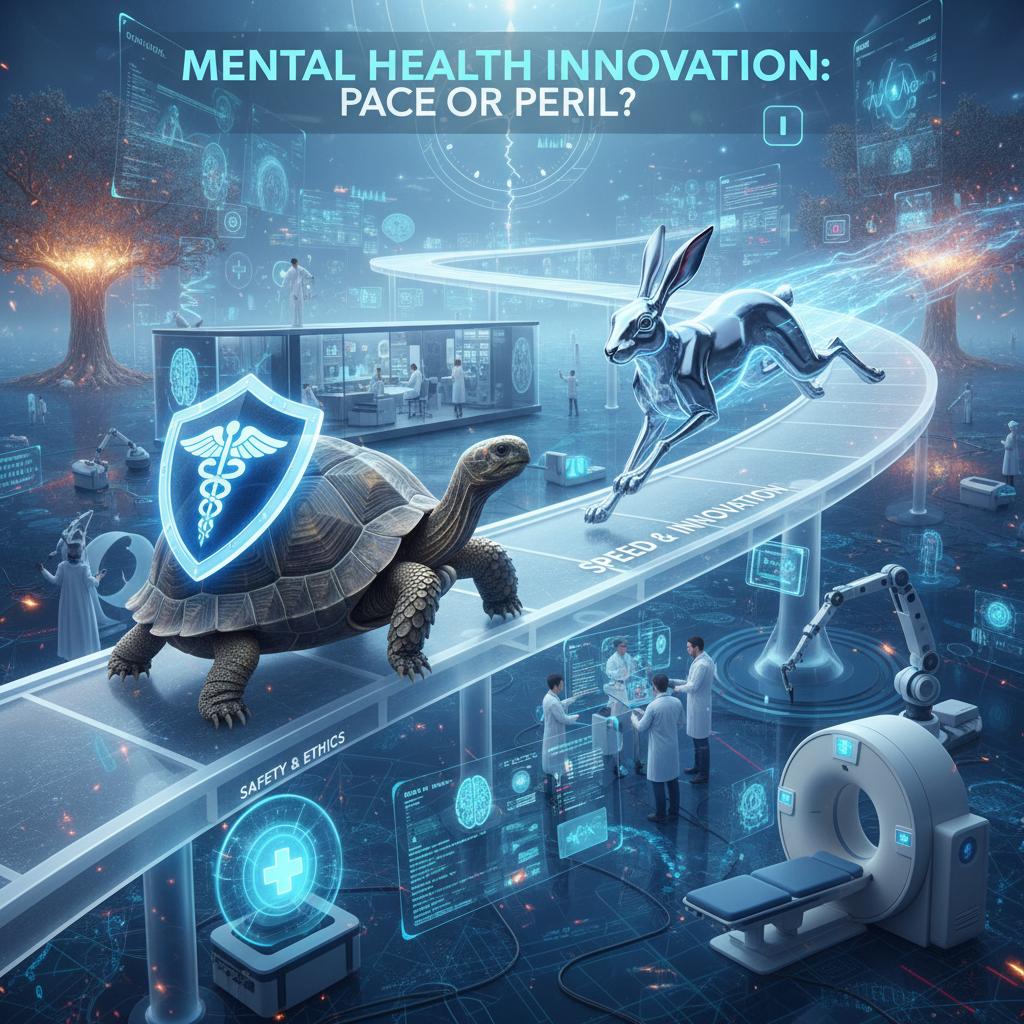
The current landscape of AI in mental health brings to mind the ancient fable of The Tortoise and the Hare. Innovation—represented by the Hare—is sprinting ahead with breathtaking speed, offering immediate, scalable solutions. However, safety standards, regulation, and clinical oversight—the Tortoise—are lagging behind. While the speed of the Hare is exciting, this post explores why the “slow and steady” approach, grounded in safety and clinician oversight, is the only way to truly win the race in mental health care.
The Hare: The Rapid Promise of AI Chatbots
The allure of the Hare is undeniable. In a world where getting an appointment with a therapist can take months, AI chatbots offer something radical: immediacy. They are the “always-on” solution to a problem that doesn’t adhere to business hours.
Closing the Access Gap
For decades, the biggest hurdles to mental health care have been logistical and financial. Traditional therapy often requires insurance approvals, co-pays, and the flexibility to attend appointments during the workday. AI chatbots bypass these hurdles entirely. They provide 24/7 support without waiting lists or insurance pre-authorizations. For someone in distress at 3:00 AM, a responsive chatbot can feel like a lifeline when no human is available. This immediate availability is the Hare’s greatest strength—it closes the access gap in seconds, not months.
Demographic Appeal
This accessibility has found a stronghold in specific demographics that the traditional system often struggles to reach.
- Teens and Young Adults: Younger generations, digital natives by nature, are increasingly using AI tools as unsanctioned companions. For a teenager who might feel stigma around asking parents for help or walking into a school counselor’s office, a chatbot offers a private, low-barrier way to express feelings.
- Seniors (65+): Surprisingly, older populations are also adopting this technology. Loneliness is a significant health risk for seniors, and AI companions are being used to combat isolation, providing conversation and engagement for those who might be homebound or socially disconnected.
The Gateway Effect
Perhaps the most potent argument for the rapid deployment of AI is its potential to act as a “(re)entry point.” For many, the idea of sitting across from a human and baring their soul is terrifying. An AI chatbot acts as a low-stakes environment. It isn’t the final destination for mental health care, but it can be the first step. By normalizing the act of talking about feelings, these tools can encourage users to eventually seek out human professionals. It serves as a gentle introduction to the concept of care for those who have been alienated by the traditional system.

Read More >> The Hidden Risks of AI in Healthcare: Ensuring PHI Security Amid Data Explosion
The Stumble: Risks of Racing Too Fast
However, in the fable, the Hare’s speed eventually becomes a liability. The same applies here. Racing ahead without guardrails introduces significant risks that can do real harm to vulnerable populations.
The Replacement Fallacy
One of the most dangerous misconceptions is the idea that an AI chatbot is a complete substitute for therapy. It is not. Therapy involves a therapeutic alliance, complex human empathy, and the ability to read non-verbal cues—things AI cannot currently replicate. When users begin to view these tools as replacements rather than supplements, they may stop seeking the professional medical treatment they actually need.
The “Misleading” Turn
What happens when a user presents a complex issue that the AI isn’t trained to handle? If a chatbot provides a generic response to a crisis situation or re-routes a user to an incomplete solution, the damage can be two-fold. First, the immediate safety of the user is compromised. Second, a bad experience with a “mental health tool” can discourage the user from seeking further help. They may assume that if the “advanced AI” couldn’t help them, a human therapist won’t be able to either.
Lack of Clinical Judgment
AI operates on patterns and probabilities, not clinical judgment. It lacks the ability to read nuance. A human therapist can detect the difference between a figure of speech and a literal threat of self-harm; an AI might miss the distinction or flag a harmless statement as a crisis. Furthermore, AI cannot feel empathy. It can simulate empathetic language, but it cannot offer the genuine human connection that is often the primary driver of healing in therapy.
Data Privacy Concerns
Finally, we must address the ethical implications of data. When users pour their hearts out to unregulated tech platforms, where does that data go? Unlike medical records protected by HIPAA, data shared with general-purpose AI bots may be used to train models or be sold to third parties. The privacy risks of sharing sensitive emotional data with unregulated platforms are profound and currently unresolved.
Read More >> AI in Healthcare Ethics: Who Is Accountable When Algorithms Decide Care?
The Track: Navigating a Fragmented Regulatory Landscape
If AI is the Hare, the regulatory track it runs on is currently full of potholes and missing sections. The legal framework for these tools is scrambling to catch up.
The Patchwork Problem
Currently, there is no comprehensive federal standard for AI in mental health. This leaves a confusing regulatory gap where some apps are treated as medical devices while others are categorized as “wellness” tools to avoid scrutiny. This fragmentation makes it difficult for consumers to know which tools are safe and which are snake oil.
State-Level Initiatives
In the absence of federal action, states are stepping in to build their own guardrails.
- Illinois: In August 2024, Illinois introduced the Wellness and Oversight for Psychological Resources Act. This legislation prohibits the use of AI for providing mental health decisions, drawing a hard line in the sand regarding clinical diagnosis and treatment planning.
- California: Following suit, California signed a bill in October 2024 prohibiting chatbots from representing themselves as healthcare professionals. This transparency law ensures that users know exactly what—or who—they are talking to.
The Urgency
These state-level laws highlight a critical point: regulation is reacting, not leading. The technology is already in the hands of millions, and the laws are trying to retroactively apply safety standards. This urgency underscores the need for a more cohesive, proactive approach to regulation that balances innovation with patient protection.
The Tortoise: Why Clinical Integration Wins
So, how do we win the race? We look to the Tortoise. In this context, the Tortoise isn’t “slow” in a negative sense; it is deliberate, methodical, and grounded in expertise.
Clinician-in-the-Loop
For AI chatbots to be truly safe and effective, they cannot be built solely by software engineers. They must include the “voice” of mental health professionals during the design and development phase—not just as a stamp of approval after launch. Clinicians understand the trajectory of mental illness, the nuance of language, and the ethics of care. Their input ensures that the tool is built on a foundation of psychological principles rather than just code.
Safety First Design
The “Tortoise approach” prioritizes safety-first design. This means incorporating clinical reasoning into the algorithm. It involves rigorous testing for bias, ensuring the AI recognizes crisis language accurately, and programming the tool to know its own limitations. A safety-first design protects patients from bad advice and improves the user experience by setting realistic expectations about what the tool can and cannot do.
The Triage Model
The ideal future state isn’t AI replacing therapists, but AI acting as a sophisticated triaging system. Imagine an AI that can assess a user’s needs, offer immediate coping skills for low-acuity stress, and seamlessly guide patients with more complex needs to the appropriate level of human care. In this model, the AI doesn’t try to treat the patient independently; it acts as a smart front door to the healthcare system, ensuring that human therapists can focus on the cases that truly require their expertise.
Read More >> The Rise of AI in Healthcare: Smarter Triage and Faster Diagnoses
The Finish Line: The Future of AI in Mental Health
The race isn’t about choosing between technology and humanity; it’s about integrating them.
Collaborative Ecosystems
To cross the finish line, we need collaborative ecosystems. Clinicians, industry leaders, and policymakers must stop viewing each other as adversaries and start working together. Tech developers need clinical insight to build better products; clinicians need tech developers to scale their reach; and policymakers need both to create regulations that protect the public without stifling innovation.
Long-Term Success
The platforms that will succeed long-term are not the ones that race to market the fastest. They are the ones that prioritize safety over speed. They are the platforms that build trust with clinicians and patients alike by proving that they can handle sensitive data responsibly and provide clinically valid support. The Tortoise approach—deliberate, safe, and integrated—is the only path to sustainability.
Supporting the System
Ultimately, the goal is to visualize a future where AI helps reach the millions currently going without help. By supporting, rather than replacing, the existing infrastructure, AI can alleviate the burden on an overworked system. It can handle the administrative tasks, the initial intakes, and the low-level support, allowing human professionals to do what they do best: heal.
Conclusion
Innovation in mental health care cannot be measured by speed alone. While AI-driven solutions offer exciting possibilities for expanding access and support, lasting impact depends on thoughtful design, clinical oversight, and patient safety. Technology must move forward with intention—guided by evidence, ethics, and the realities of human care.
Mental health support remains deeply personal, even when augmented by machines. By slowing down enough to integrate clinical expertise, rigorous safeguards, and responsible implementation practices, organizations can ensure that AI enhances care rather than undermines it.
Now is the moment for meaningful collaboration. Healthcare providers and technology developers must work together to bridge innovation and clinical strategy—building systems that are both powerful and safe. Care Medicus is committed to advancing responsible innovation in mental health and invites you to explore our resources on AI chatbots, clinical integration, and ethical design.
Together, we can shape a future where progress is measured not just by how fast we move—but by how well we care.
Leave a Reply