



You’ve wrapped up a nonstop day filled with back-to-back patient encounters, but instead of heading home, you’re stuck re-dictating entire notes because your legacy software keeps mistranscribing critical clinical terminology (too much to imagine though). Healthcare leaders, medical coders, and IT teams know the ripple effect: lost time, inconsistent documentation, delayed claims, and avoidable stress. With administrative tasks consuming close to a third of a clinician’s workday in 2025, it’s no surprise that traditional dictation systems have become a serious obstacle in modern care delivery.
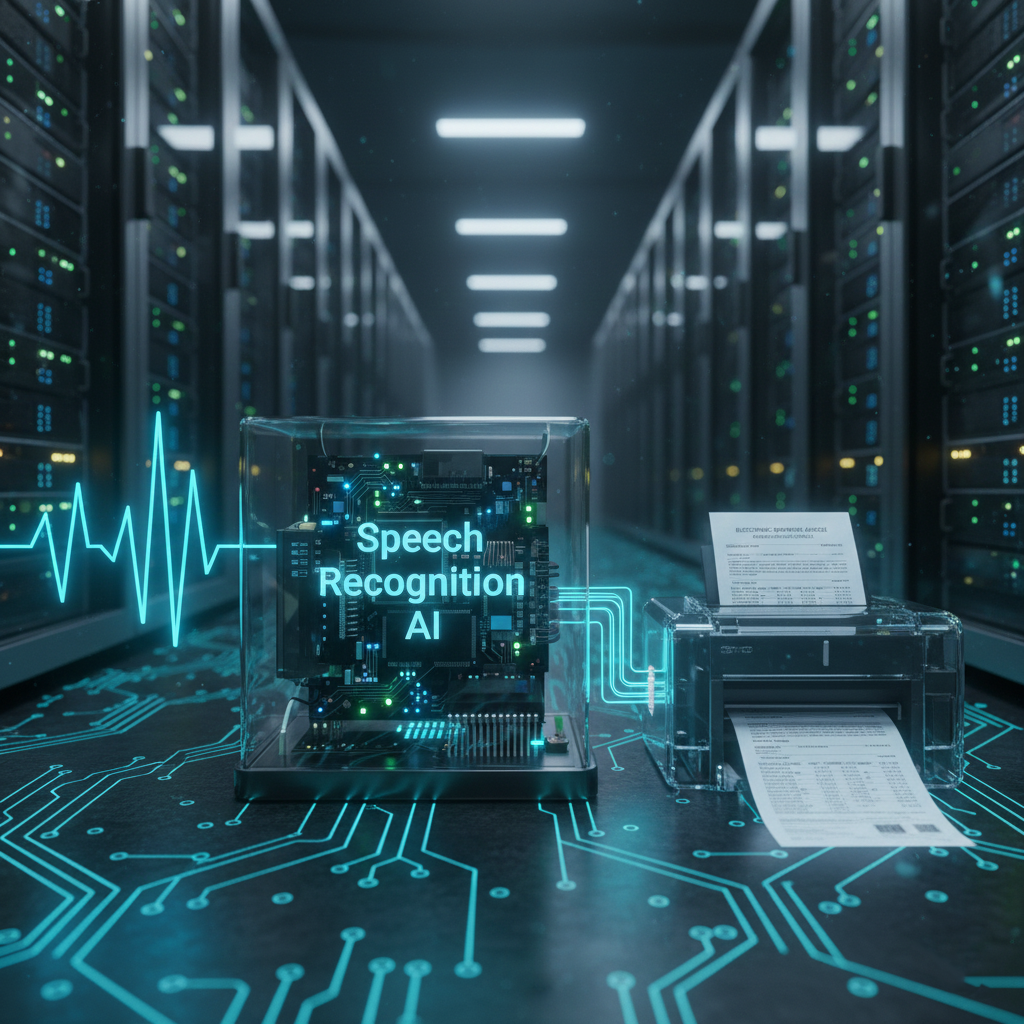
The good news? AI speech recognition healthcare technology has matured into a highly practical solution—not a novelty—bringing clinicians faster, context-aware transcription that seamlessly integrates with EHR workflows. For organizations outsourcing medical billing services, reliable documentation is even more critical, and the new generation of clinical documentation AI is proving to be an indispensable tool.
Drawing from real-world data, evolving federal guidelines, and hands-on user experiences, this article walks through how AI is reshaping clinical documentation—from capturing nuanced terminology to bolstering CMS compliance and coding accuracy. Whether you’re directly providing care or leading operational strategy, understanding these advancements can free up hours and reduce documentation-related friction across your organization.
Read More: Regulatory Shifts in Medical Billing 2025: ICD-11, E/M Coding, Telehealth & What Providers Must Know
Evolution of Medical Speech Recognition
Medical speech recognition has transformed dramatically over the past few decades. Early systems of the 1990s were slow, rigid, and easily confused by clinical shorthand, accents, or specialty-specific terminology. Accuracy often topped out around 70–80%, and physicians spent as much time correcting outputs as they did dictating. These early tools relied on fixed rule-based engines, treating medical speech like generic dictation instead of a specialized, domain-dense language.
Today’s AI speech recognition healthcare solutions are built on a very different foundation. Advances in natural language processing, machine learning, and large medical language models have enabled far more intuitive and adaptive systems. Tools inspired by models such as ClinicalBERT or more modern clinical LLMs can now interpret complex verbal cues, recognize specialty vocabulary, and maintain accuracy amid background noise or multi-voice conversations—critical in areas like emergency medicine or surgical environments.
A 2024 survey of clinicians across major U.S. medical centers reported that more than 78% of users were satisfied with their AI-enabled dictation tools, citing faster documentation times and reduced cognitive load. Much of this improvement stems from the ability of clinical documentation AI to directly interface with EHRs, creating structured notes from conversational dialogue, reducing duplicate entry, and minimizing manual corrections.
This evolution reflects more than just technology—it responds to urgent needs across healthcare. With EHR demands consuming over 16 minutes per patient encounter, clinicians are relying on smarter, more proactive tools that convert naturally spoken assessments, plans, and diagnostic details into clean, compliant documentation. For organizations partnering with outsourced medical billing services, fewer documentation inconsistencies mean fewer downstream claim edits and denials. The result is a more supportive, less burdensome clinical environment where technology feels like a partner, not a chore.
How AI Captures Context & Terminology
Traditional dictation tools often stumble over similar-sounding clinical terms, abbreviations with multiple meanings, or long, specialty-specific wording. These recurring errors—mixing “dysphagia” with “dyspepsia,” misinterpreting acronyms, or misplacing key clinical qualifiers—create unnecessary rework and can compromise patient safety.
Modern clinical documentation AI addresses these issues through contextual interpretation rather than simple speech-to-text transcription. These systems combine acoustic modeling with medical language models trained on large specialty datasets, enabling them to understand terminology in relation to clinical context. Instead of hearing only isolated words, they process intent and meaning.
For example, when a clinician in a trauma bay dictates “bilateral pneumothorax,” an AI-driven model recognizes the significance of the term, the severity implied by the setting, and the expected structure of the note—ensuring the transcription is both accurate and clinically appropriate.
This context sensitivity extends to abbreviations that vary across specialties (“MI” for myocardial infarction in cardiology versus mitral insufficiency in other settings). Many platforms allow organizations to upload custom terminology lists—sometimes up to 1,000 terms—so the AI can learn institutional language patterns, improving detection rates and reducing ambiguity.
AI speech recognition healthcare tools also manage real-world challenges like noise and overlapping voices. Through speaker diarization and timestamping, the system can distinguish the primary clinician from nurses or assistants in busy environments such as the ICU. A recent user feedback analysis showed that roughly 75% of clinicians encountered fewer than 10 errors per dictation, and more than 70% of human evaluators preferred AI-generated transcripts over manual dictation outputs.
Medical coders benefit as well. When terminology is captured correctly, codes map more accurately to ICD-10, CPT, and HCC categories. For value-based care, even subtle nuances—such as specifying “diabetic nephropathy with albuminuria”—can influence risk adjustment. Providers outsourcing medical billing services gain cleaner, clearer documentation that reduces denial risks and accelerates the revenue cycle.
In essence, clinical documentation AI converts fragmented speech into a reliable, context-rich narrative aligned with clinical intent and coding requirements.
CMS Documentation Compliance Risks
For healthcare organizations, navigating CMS documentation standards is one of the most demanding aspects of compliance. Even minor omissions in clinical notes can trigger extensive audits, clawbacks, or underpayments. Traditional dictation tools often compound these challenges by generating incomplete or inconsistent entries that fail to satisfy CMS specificity requirements.
Common gaps include insufficient detail when describing comorbidities, missing functional assessments for programs like the Patient-Driven Groupings Model (PDGM), or unclear descriptions of social determinants of health that impact care planning. These oversights can significantly impact reimbursement accuracy and quality scoring, especially in home health where CMS tracking forms—such as OASIS—require precise functional and clinical details.
A 2025 review of documentation practices indicated that inconsistent or incomplete notes contributed to denial rates as high as 40% in some outpatient practices. Clinicians often assume coders can interpret intent, but CMS requires explicit statements. This disconnect leads to repeated coder queries, delayed billing, and significant administrative waste, especially in environments where staffing shortages already strain documentation review workflows.
AI speech recognition healthcare systems help close these gaps by embedding compliance logic directly within the dictation process. Real-time prompts may ask for additional details when clinicians mention conditions that require specificity—such as clarifying whether a hospitalization involved formal assistance or verifying functional mobility scoring for Medicare home health encounters.
Advanced platforms cross-reference dictation content with CMS ontologies and clinical guidelines, automatically identifying missing elements that could impact coding accuracy or risk adjustment. Organizations that implemented these AI-assisted workflows have reported up to a 29% reduction in documentation rework, as well as more consistent reimbursement outcomes.
For teams that rely on outsourced medical billing services, this proactive quality layer supports faster claim turnaround, fewer rejected submissions, and cleaner handoffs between clinical staff and revenue cycle teams.
HIPAA Security for Voice Data
As healthcare organizations increasingly adopt voice-enabled tools, protecting PHI in audio form has become a critical priority. Legacy dictation systems often store recordings in unsecured locations or transmit files without adequate encryption, exposing sensitive patient information to potential breaches.
HIPAA regulations require robust safeguards, including encryption in transit and at rest, controlled access permissions, and comprehensive audit trails. However, manually transcribing or transferring audio increases the likelihood of human error—one of the most common sources of security incidents.
Clinical documentation AI platforms are built with security at the forefront. These systems typically use end-to-end encryption standards (such as AES-256) and operate within secure cloud infrastructures designed to protect sensitive health data. Many also incorporate automatic de-identification, removing protected health information before audio is processed.
Role-based access controls ensure that only authorized users can view or edit recordings, while audit logs track every interaction with the system. Advanced voice-trigger settings prevent accidental or unauthorized capture, making voice documentation safer and easier to manage.
For organizations outsourcing medical billing services, secure voice-to-EHR workflows reduce exposure during handoffs and minimize the number of individuals who interact with raw patient data. With regulatory updates evolving—especially those addressing AI governance—these protections help healthcare providers maintain compliance while modernizing their documentation processes.

Real-World Impact on Coding Accuracy
The true value of AI speech recognition healthcare tools becomes clear when examining their effect on coding accuracy and revenue cycle performance. Inconsistent or vague documentation frequently leads to under-coding, missed comorbidities, and denials—all of which slow payment and interrupt care.
Clinical documentation AI helps eliminate these issues by generating transcripts that more closely align with the clinical reality. Studies have shown that AI-supported transcription reduces missed clinical entities by over 60% and improves first-pass coding accuracy to levels approaching 95%, especially in complex specialties like cardiology or oncology.
Consider an oncology clinic where providers verbally outline staging details, treatment plans, and metastatic involvement. With AI transcription, these elements are captured clearly and mapped to relevant ICD-10 codes, significantly reducing the number of coding queries. In one real-world scenario, query volume dropped by roughly 40%, allowing coders to focus on more complex chart reviews instead of basic clarifications.
Clinicians also report meaningful time savings—often reclaiming five to eight minutes per encounter—which adds up to several hours per week that can be redirected toward patient care. For organizations working with outsourced billing partners, fewer discrepancies mean faster claims processing and more predictable reimbursement cycles.
Overall, clinical documentation AI transforms documentation from a repetitive task into a strategic advantage that strengthens clinical, operational, and financial performance.
Future of AI-Driven Clinical Documentation
At Care Medicus, we know the next generation of clinical documentation isn’t just about transcription—it’s about intelligent, ambient technology that works alongside clinicians in real time. AI-driven documentation tools are rapidly evolving into true clinical partners, capturing conversations, pulling relevant data, and generating accurate draft notes that reflect each clinician’s style and workflow.
This is the moment for healthcare organizations to embrace future-ready documentation. Advanced models powered by retrieval-augmented generation, adaptive learning, and seamless interoperability can eliminate documentation bottlenecks, enhance accuracy, and strengthen revenue integrity. With transparent reasoning, human-in-the-loop validation, and predictive insights that highlight gaps before claims are submitted, AI becomes a trusted ally—not a risk.
Now is the time to act. Pilot AI documentation tools in high-volume specialties, streamline your workflows, and elevate the experience for clinicians, CDI teams, and revenue cycle departments alike.
Partner with Care Medicus to bring intelligent documentation to your organization—and step confidently into the future of efficient, accurate, and patient-centered care.
Leave a Reply