




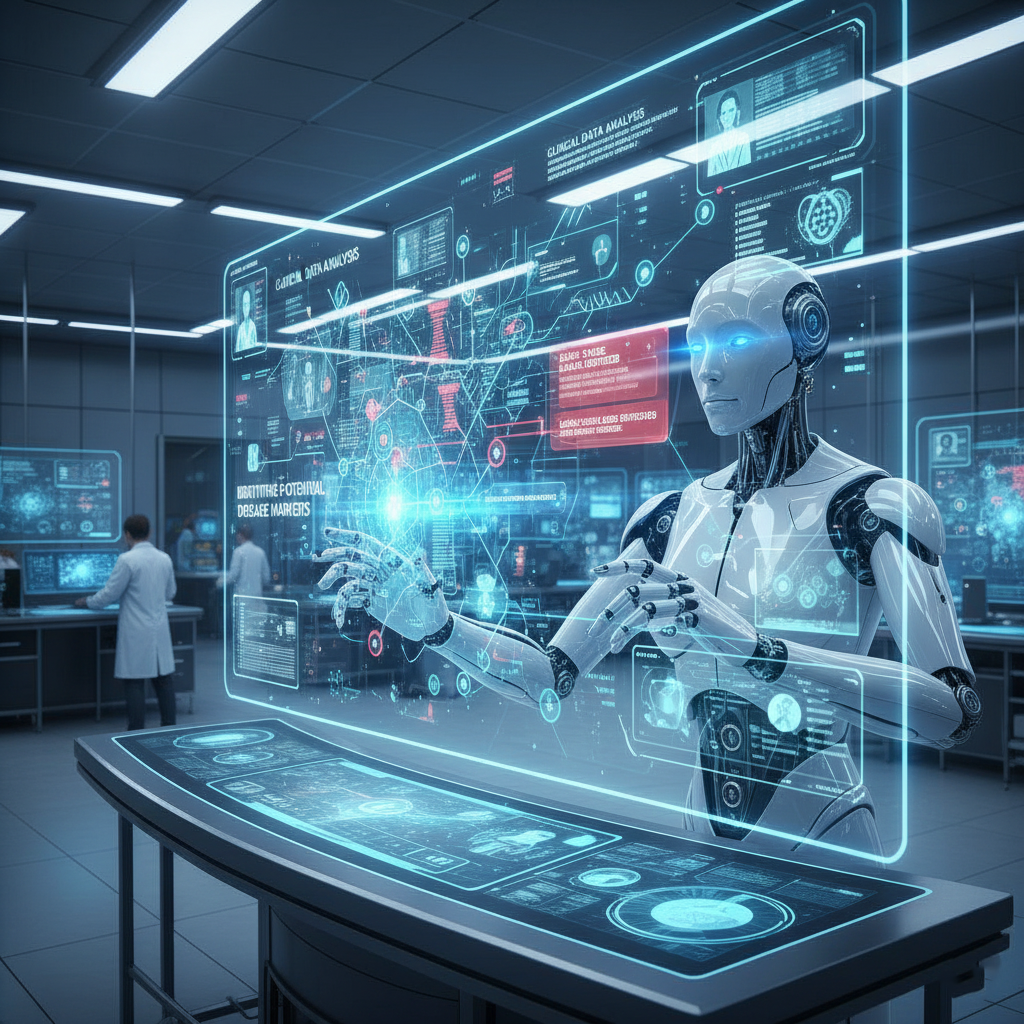
Healthcare is entering a profound technological transformation, with artificial intelligence emerging as a pivotal tool in diagnosis, treatment planning, and patient care. AI diagnosis tools now analyze vast datasets with speed and precision, supporting clinicians in making earlier and more personalized decisions. In this blog, we explore how AI interprets symptoms, powers clinical AI triage, and reshapes the future of modern healthcare.
How AI Reads and Understands Clinical Data
AI identifies patterns within massive clinical datasets using advanced machine learning (ML) and deep learning (DL) algorithms. These systems evaluate symptoms, medical histories, imaging studies, and laboratory results to generate meaningful diagnostic insights. What once took hours of analysis can now be accomplished in seconds.
Pattern Recognition at Scale: AI systems analyze millions of data points—symptoms, vital signs, imaging, lab values—to identify subtle clinical patterns that may take clinicians years of experience to recognize. This ability to detect faint correlations helps with earlier diagnosis and improved risk stratification.
Multimodal Data Integration: Instead of reviewing each data source separately, AI merges imaging results, EHR entries, lab findings, and even wearable device data into a unified analysis. This creates a holistic patient profile that supports precision diagnostics.
Real-Time Processing and Alerts: AI tools continuously process incoming patient information. When abnormalities appear—such as deteriorating vitals, abnormal lab trends, or concerning symptom clusters—the system triggers automatic alerts for timely clinical intervention.
Reducing Diagnostic Variability: Human interpretations can differ due to fatigue, workload, or subjective judgment. AI provides consistent, repeatable analysis, reducing diagnostic variability and supporting evidence-based decisions.
Predictive Modeling for Future Risk: By studying historical data trends, AI predicts potential future complications, such as sepsis risk, cardiac events, or respiratory decline. This helps clinicians take proactive actions instead of reactive ones.
Read More: Minimizing Claim Rejections in 2025: A Guide For Healthcare Providers
The Power Behind Machine Learning and Deep Learning
Machine learning models learn from historical patient data, allowing them to detect correlations between subtle clinical features and specific diagnoses. Deep learning enhances this by analyzing complex imaging data and identifying microscopic abnormalities that may indicate early disease. These capabilities strengthen the accuracy and confidence of clinical decision-making.
Machine Learning Training With Large Clinical Datasets: ML algorithms learn from thousands of real clinical cases. They understand how specific symptoms or imaging features correlate with specific diagnoses, improving performance over time as new data is introduced.
Deep Learning and Neural Network Architecture: Deep learning models use layered neural networks that mimic human brain structures. These networks extract complex features—such as texture, shape, or signal anomalies—that traditional ML might miss.
Continuous Model Improvement (Auto-Learning): As clinical environments generate new data, AI models improve automatically. This continuous learning loop enhances accuracy, reduces false positives, and adjusts to emerging disease patterns.
Handling Noisy or Incomplete Data: Unlike traditional decision systems, ML/DL algorithms can still extract meaningful insights from messy, inconsistent, or incomplete data—making them valuable when patient information is fragmented.
Natural Language Processing (NLP) in Clinical Settings
NLP enables AI to interpret unstructured clinical text such as physician notes, radiology reports, and discharge summaries. By extracting key symptoms and findings, NLP transforms narrative documents into structured, searchable data—streamlining clinical AI triage and supporting faster diagnostics.
Extracting Meaning From Unstructured Notes: Clinical documentation is often narrative, unstructured, and full of medical shorthand. NLP translates this into structured data by identifying symptoms, conditions, medications, and timestamps.
Enhancing Clinical AI Triage Tools: NLP-driven triage systems quickly scan incoming notes, patient complaints, or chat-based symptom descriptions to prioritize urgency. This improves emergency room efficiency and reduces time-to-care.
Automatic Summarization of Medical Records: NLP can create concise summaries of long patient histories, allowing clinicians to quickly understand the most relevant information before making decisions or conducting consultations.
Clinical Coding Support: By interpreting descriptions in charts and reports, NLP helps coding systems assign accurate ICD or CPT codes—minimizing human error and speeding up administrative processes.
Sentiment and Behavioral Health Analysis: NLP can analyze patient narratives for linguistic clues related to anxiety, depression, cognitive decline, or behavioral changes, assisting mental health assessments.
The Data That Powers AI Diagnosis Tools
The effectiveness of AI in diagnosis depends on the quality and diversity of its training data. Modern AI tools integrate information from multiple sources to build a complete clinical picture.
Electronic Health Records (EHRs): EHRs provide historical patient data, lab results, diagnoses, medications, and treatment plans. AI analyzes these records to identify risk factors, predict disease progression, and tailor care recommendations.
Medical Imaging: AI is highly effective in analyzing X-rays, CT scans, MRIs, and other imaging modalities. Trained on large image datasets, these tools can detect tumors, fractures, and cardiovascular abnormalities with expert-level accuracy.
Genomic Data: By analyzing genetic sequences, AI helps clinicians personalize care plans, identify hereditary risks, and select targeted therapies for conditions like cancer.
Real-Time Wearable Data: Wearable devices supply continuous health data, enabling AI models to monitor patients in real time. This allows for early detection of irregularities before they escalate into serious conditions.
Population Health Data: Large-scale datasets that include environmental and behavioral data help AI identify disease trends, support predictive modeling, and improve public health responses.
The Impact of AI on Medical Coding and Billing
AI-powered automation is revolutionizing administrative workflows. Modern systems read clinical documentation and assign accurate billing codes, reducing administrative errors, improving reimbursement accuracy, and freeing staff for more strategic tasks.
Automated Code Assignment: AI reviews clinical documentation and assigns the correct medical codes for diagnoses, treatments, and procedures. This reduces time-consuming manual work and enhances billing accuracy.
Error Detection and Compliance: AI scans claims for inconsistencies, missing details, or incorrect codes. It ensures compliance with payer rules and reduces the risk of claim denials or audits.
Faster Claims Processing: By accelerating coding and documentation review, AI shortens the revenue cycle, enabling healthcare organizations to receive reimbursements more quickly.
Reducing Administrative Burden: AI takes over repetitive tasks, freeing coders and administrative staff to focus on complex cases that require human context, nuance, and clinical understanding.
Improving Documentation Quality: AI tools give real-time suggestions as clinicians document notes—ensuring completeness, preventing missing information, and promoting more accurate medical records.
Real-World Applications of AI in Diagnosis
AI diagnosis tools and clinical AI triage systems are already delivering measurable benefits across healthcare settings.
Advancing Medical Imaging Interpretation: AI enhances radiology by acting as a second reader, identifying abnormalities that may escape human detection. These tools assist in diagnosing cancers, fractures, eye diseases, and more, reducing interpretation times and improving accuracy.
Accelerating Stroke Diagnosis: Platforms like Viz.ai rapidly analyze CT scans to detect large vessel occlusions and instantly alert stroke teams. This significantly shortens time-to-treatment and improves patient outcomes.
Improving Cancer Detection and Management: AI aids in early cancer detection, polyp identification during colonoscopy, and treatment planning based on tumor genetics. These insights support more targeted and effective oncology care.
Optimizing Clinical AI Triage: AI triage tools evaluate patient symptoms and vital signs upon arrival, prioritizing those who require urgent intervention. This enhances patient flow and ensures timely, efficient care in emergency and primary care settings.
Read More: Interoperability & System Integration in Healthcare for Better Outcomes
Google’s Med-PaLM 2: A Look Into the Future
Med-PaLM 2 represents the next era of medical AI. This large language model can interpret clinical text, answer medical questions, and suggest diagnostic possibilities. While still in development, its promise highlights how AI will continue to support clinical reasoning in the coming years.
Specialized Medical Language Understanding: Med-PaLM 2 is trained on medical literature, clinical guidelines, and curated datasets, enabling it to understand complex medical terminology and reasoning patterns better than general-purpose models.
Evidence-Based Diagnostic Suggestions: The model can review clinical notes and provide potential diagnoses or differential considerations. It mirrors clinical reasoning pathways, giving clinicians new perspectives.
High-Quality Medical Question Answering: Med-PaLM 2 demonstrates strong performance on medical board-style questions. It can help clinicians, students, and researchers cross-check information or explore alternative interpretations.
Summarization of Medical Documents: The model effectively summarizes radiology reports, discharge summaries, and research papers, helping clinicians review information more quickly.
Designed for Future Clinical Decision Support: While still research-stage, Med-PaLM 2 paves the way for LLMs that may eventually integrate with EHRs, supporting bedside decisions and enhancing clinician productivity.
The Essential Role of Human Clinicians
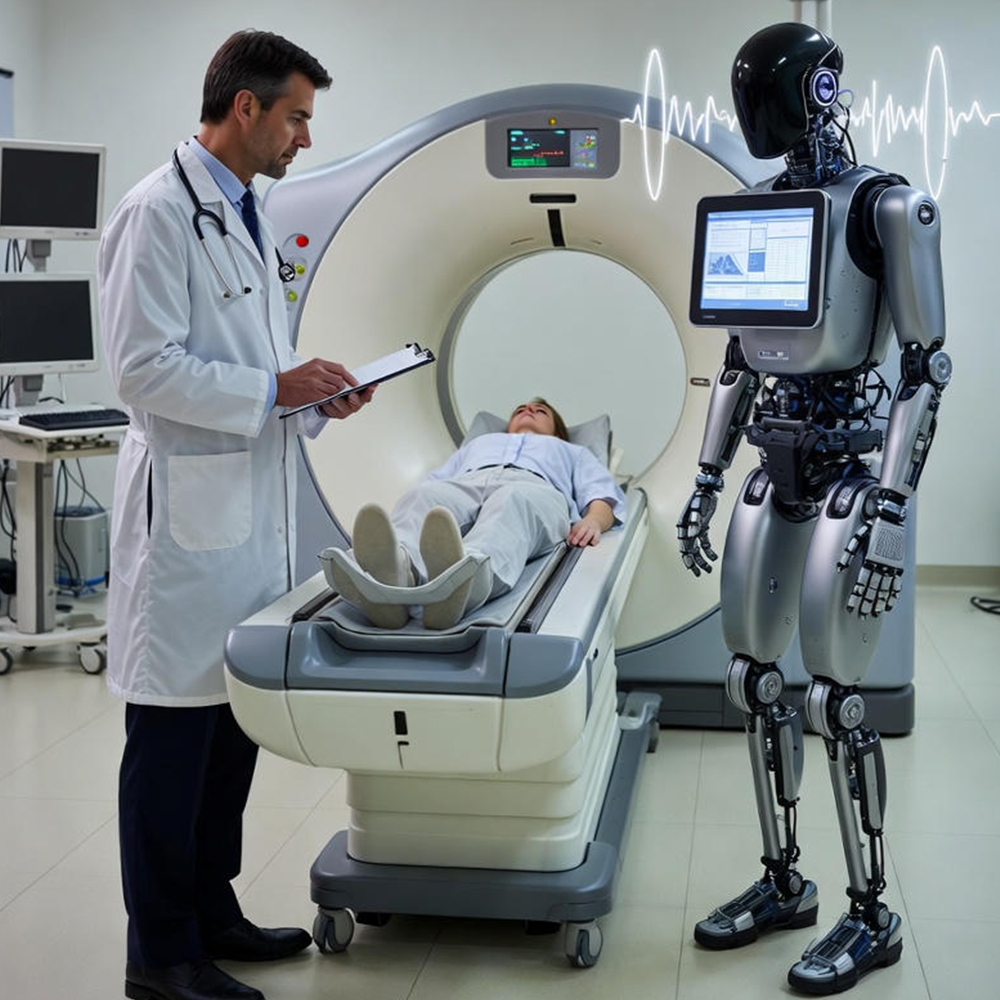
AI enhances clinical decision-making but does not replace the expertise of healthcare professionals. Clinicians validate AI-generated insights, apply contextual judgment, and deliver the empathy and nuance required for quality care.
Handling Rare and Ambiguous Cases: AI excels in pattern recognition but struggles when data is scarce or cases are highly unusual. Clinicians apply creative reasoning and medical intuition during diagnostic uncertainty.
Oversight and Ethical Responsibility: Healthcare providers are responsible for validating AI outputs. Clinicians ensure AI recommendations are safe, appropriate, and aligned with ethical and regulatory expectations.
Collaborative Intelligence (Human + AI): The future is hybrid: clinicians guiding the patient journey while AI processes massive data to improve efficiency, accuracy, and predictive care. Together, they enhance patient outcomes far more than either could alone.
Limitations and Challenges of AI Diagnostic Tools
Despite rapid advances, AI faces challenges such as limited explainability, data bias, and uneven performance across population groups. Addressing these issues through explainable AI and diverse datasets is essential for equitable adoption.
The Black Box Challenge: Many deep learning models offer limited transparency into how they reach their conclusions. This lack of interpretability can reduce trust, especially when clinicians need to understand the rationale behind a diagnosis. Explainable AI (XAI) aims to address this gap by making AI reasoning more transparent.
Bias and Inequities in Healthcare AI: If training data underrepresents certain populations, AI models can unintentionally produce biased outcomes. Ensuring diverse, inclusive, and historically balanced datasets is crucial to prevent the amplification of health inequities.
Where Human Doctors Still Excel: AI can rapidly process complex data and recognize patterns across millions of examples. Yet human clinicians possess contextual reasoning, emotional intelligence, and the ability to navigate ambiguous or rare cases—skills current AI systems cannot replicate. The future will rely on a collaborative model: AI for speed and scale, humans for judgment and compassion.
Charting the Future of AI in Healthcare
AI isn’t coming to healthcare… it’s already here. The most forward-thinking practices are quietly combining human expertise with proven AI diagnosis tools and clinical triage systems that cut misdiagnosis risk, speed up patient workups, accelerate reimbursements, and deliver truly personalized care – all while reducing physician burnout and liability.
At Care Medicus, we’ve spent the last four years perfecting an AI-powered diagnostic support platform that integrates seamlessly with your existing EHR, flags high-risk cases in real time, auto-prioritizes triage queues, and gives your clinicians explainable, evidence-based insights they can actually trust – not just another black-box algorithm.
Leave a Reply