





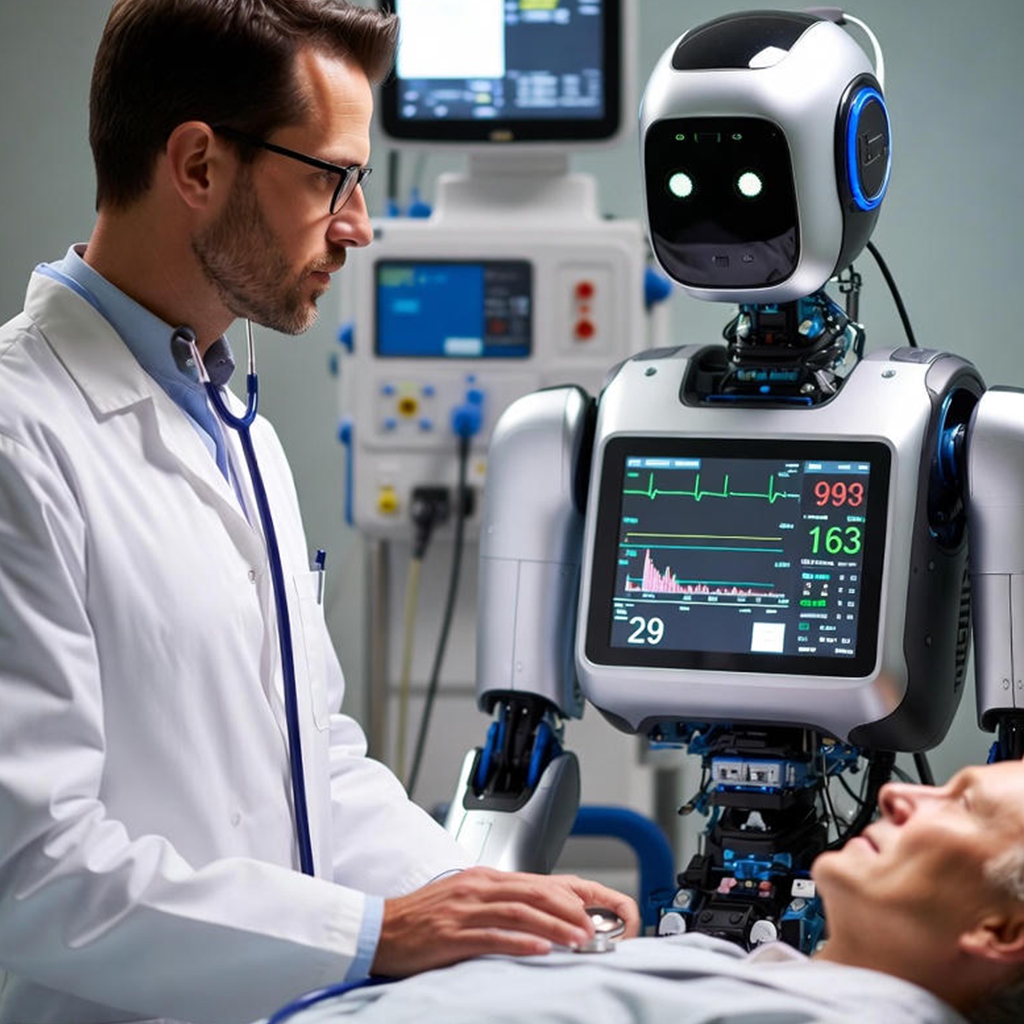
In the bustling corridors of today’s hospitals, where physicians juggle endless patient charts and diagnostic puzzles, artificial intelligence is quietly reshaping the landscape. Healthcare in 2025 has moved at a relentless pace. Physicians are seeing more patients, clinical complexity is rising, and the pressure to document, diagnose, and deliver precision care is at an all-time high. Into this demanding environment steps artificial intelligence — not as a replacement for clinicians, but as a supportive partner that relieves mental load and enhances clinical clarity.
AI clinical workflows now touch nearly every corner of healthcare delivery. What once took hours of chart review, paperwork, and manual cross-referencing can now be completed in minutes. But rather than fueling fears of robotic takeover, AI in healthcare 2025 hass emerging as a digital co-pilot — scanning immense data sets, surfacing patterns humans may miss, and giving clinicians space to reconnect with the human side of medicine.
The potential is staggering: AI is projected to save the U.S. healthcare system up to $150 billion annually, not by replacing clinicians but by reducing errors, eliminating redundant tasks, and strengthening clinical decision-making. What’s even more compelling is how AI amplifies qualities only humans possess — empathy, contextual judgment, ethical reasoning, and nuanced patient understanding.
This article explores how AI clinical workflows enhance diagnostics, why physicians must remain firmly in the driver’s seat, what CMS documentation rules mean for AI in medical documentation, how AI reduces burnout, real collaboration success stories, and what the human + AI partnership will look like in the coming decade. Whether you’re a clinician refining your workflow or a healthcare leader designing AI adoption strategies, this guide offers a grounded and forward-looking roadmap.
AI’s Role in Clinical Decision Support
Imagine a clinician evaluating a patient with vague, overlapping symptoms. The scenario could quickly spiral into a diagnostic maze — unless an intelligent support system is working in the background. This is where clinical decision support AI transforms the workflow.
Modern AI-powered CDSS tools sift through:
-
electronic health records (EHRs)
-
medical literature
-
lab results
-
imaging studies
-
population-level data
all in seconds. They don’t replace a physician’s judgment; they augment it by flagging missing information, suggesting differential diagnoses, and identifying red flags that might otherwise be lost amid cognitive load.
This isn’t theoretical. In radiology, AI diagnosis tools consistently detect subtle anomalies in X-rays, MRIs, and CT scans with accuracy levels reaching 94%, sometimes outperforming human specialists in specific, narrow tasks. This precision allows radiologists to focus on the most complex findings while AI handles the front-line review.
AI clinical workflows have also accelerated diagnostic timelines. A primary care study found AI reduced diagnostic time by 20%, enabling earlier interventions for chronic illnesses like diabetes and cardiovascular disease.
AI is equally transformative in predictive analytics. Sepsis models monitor vital signs and historical data, alerting clinicians with up to 85% accuracy — often detecting deterioration before it becomes clinically obvious. In oncology, platforms like Watson for Oncology analyze genomic markers to recommend personalized treatment plans, giving oncologists fast access to global research without drowning in information.
The takeaway is simple but profound: AI handles the data deluge so clinicians can focus on context, compassion, and clinical reasoning — the elements machines cannot replicate.
Of course, responsible use matters. Overreliance without training can dull critical thinking. AI must be a tool, not a crutch. When properly implemented, AI for physicians becomes an extension of the medical mind, not a substitute for it.
Read More: How AI & Automation are Revolutionising Medical Billing: The Future of RCM
Why Physicians Must Stay in Control
Even as AI becomes embedded in healthcare, the physician remains the final authority — and for good reason.
While AI excels at pattern recognition, it lacks the human ability to interpret meaning behind symptoms. It cannot understand a patient’s fear, cultural background, body language, or emotional cues. It cannot comfort a frightened parent, negotiate treatment preferences, or navigate complex ethical dilemmas.
AI systems are trained on historical data, which means they are vulnerable to:
-
population bias
-
uneven representation
-
flawed assumptions baked into datasets
If left unchecked, these issues can lead to skewed recommendations. This is why human-in-the-loop structures remain essential. Physicians review and validate every AI suggestion, ensuring recommendations align with real-world conditions.
Regulators share this stance. Organizations like HIMSS emphasize that clinical authority must remain with humans to preserve accountability. As AI takes on routine tasks — summarizing notes, pre-populating forms, suggesting codes — it frees clinicians to focus on nuanced patient conversations that no algorithm can replace.
Even with cutting-edge AI in healthcare 2025, empathy remains the irreplaceable core of medicine.
Read More: The Rise of AI in Healthcare: Smarter Triage and Faster Diagnoses
CMS Documentation Rules & AI
Documentation may not be glamorous, but it is mission-critical. CMS requires highly accurate, specific patient records to support reimbursement, quality metrics, value-based care, and audit readiness. Here, AI in medical documentation has become a game changer — but only when aligned with CMS rules.
Ambient AI scribes now listen to clinical encounters, generating structured documentation that clinicians can quickly review. This reduces “pajama time,” cuts down after-hours charting, and keeps documentation compliant with CMS requirements.
AI can auto-fill structured elements such as:
-
review of systems
-
physical exam components
-
medication lists
-
risk assessments
Yet, CMS requires clinicians to attest to the accuracy of all AI-generated content. This prevents hallucinations or fabricated notes — a known risk with generative models. AI can assist, but the clinician must verify each detail.
CMS also mandates audit logs, transparency, and adherence to HIPAA standards. As regulations evolve, especially with 2025 cybersecurity updates, healthcare leaders must ensure AI platforms meet these requirements to avoid denials or compliance issues.
When done right, AI transforms documentation from a burden into a seamless extension of the clinical workflow — enhancing accuracy while reclaiming valuable time for patient care.
Read More: Regulatory Shifts in Medical Billing 2025: ICD-11, E/M Coding, Telehealth & What Providers Must Know
AI Helps Reduce Burnout
Burnout is one of healthcare’s most urgent crises. Nearly 60% of clinicians report emotional exhaustion, with administrative burden cited as the leading cause.
AI reduces burnout by eliminating repetitive tasks, including:
-
charting
-
scheduling
-
coding support
-
triage questionnaires
-
information retrieval
Ambient documentation alone can reduce weekly charting time by several hours, dramatically improving work-life balance. Predictive analytics help clinicians anticipate patient needs, reducing last-minute emergencies and stabilizing workflow intensity.
AI-powered triage tools also support overstretched systems by identifying urgent cases early and routing lower-risk cases more efficiently. This doesn’t replace clinicians — it protects them from unnecessary overload.
The result is a more sustainable practice environment where physicians can reconnect with the purpose that drew them into medicine: meaningful human care.
Real Collaboration Examples
AI + physician collaboration is already delivering measurable impact across specialties.
1. Sepsis Early Warning at Johns Hopkins: The TREWS system flags sepsis risks with 85% accuracy, giving clinicians time to intervene before deterioration sets in.
2. Ophthalmology Breakthroughs: Google’s DeepMind detects retinal diseases with expert-level precision, allowing ophthalmologists to prioritize complex cases.
3. Mayo Clinic’s Diagnostic Assistance: AI suggests possible tests and differential diagnoses based on patient symptoms, accelerating complex decision-making.
4. Telemedicine Triage: Platforms like Teladoc use AI to screen symptoms before routing to clinicians, improving access in underserved regions.
5. Diabetes Management: Medtronic’s Guardian Connect predicts glucose drops hours in advance, supporting patient self-management and clinical monitoring.
Across oncology, cardiology, gastroenterology, and emergency care, AI reduces diagnostic errors by up to 30% in supported workflows.
Each case demonstrates the same truth:
AI provides computational power — clinicians provide wisdom. Together, they elevate care.
The Human + AI Future
Healthcare’s future is undeniably hybrid. By 2032, the AI healthcare market is expected to exceed $427 billion, driven by innovations that refine the fusion of human judgment and machine intelligence.
We will see:
-
ambient-intelligence exam rooms
-
generative AI for clinician training
-
AR-guided surgical precision
-
federated learning for privacy-preserving collaboration
-
real-time summarization of clinical encounters
-
AI-supported population health management
Medical schools are already incorporating AI literacy into curricula. Regulations will continue to evolve to protect PHI while enabling safe innovation.
What won’t change is the physician’s central role.
AI may automate tasks, but humans will continue to shape the moral, empathetic, and relational core of care. The future isn’t human vs. machine — it’s human-centered AI designed to lift healthcare to new heights.
Ready to Build the Future of Your Medical Team?
The era of AI in healthcare isn’t on the horizon; it is already here. But as we have explored, the technology is not the destination—it is merely the vehicle. The true destination is a healthcare environment where your providers are less burned out, your documentation is compliant, and your patient outcomes are prioritized above data entry.
Navigating the shift from traditional practice to “augmented” medicine is a complex journey. It requires more than just buying software; it requires a strategic overhaul of your clinical workflows, a deep understanding of CMS regulations, and a commitment to preserving the doctor-patient relationship. You do not have to walk this path alone.
This is where Care Medicus steps in. We understand that technology should never overshadow the human touch; it should elevate it. Our mission is to bridge the gap between cutting-edge AI capabilities and the practical, day-to-day realities of your clinic or hospital system. We don’t just implement tools; we design ecosystems where your physicians feel supported, not replaced.
Whether you are looking to deploy ambient clinical intelligence to end “pajama time,” integrate predictive models for better decision support, or audit your current systems for regulatory safety, Care Medicus provides the expertise and governance frameworks you need. We help you build a robust “human-in-the-loop” strategy that ensures efficiency never comes at the cost of empathy or accuracy.
Leave a Reply