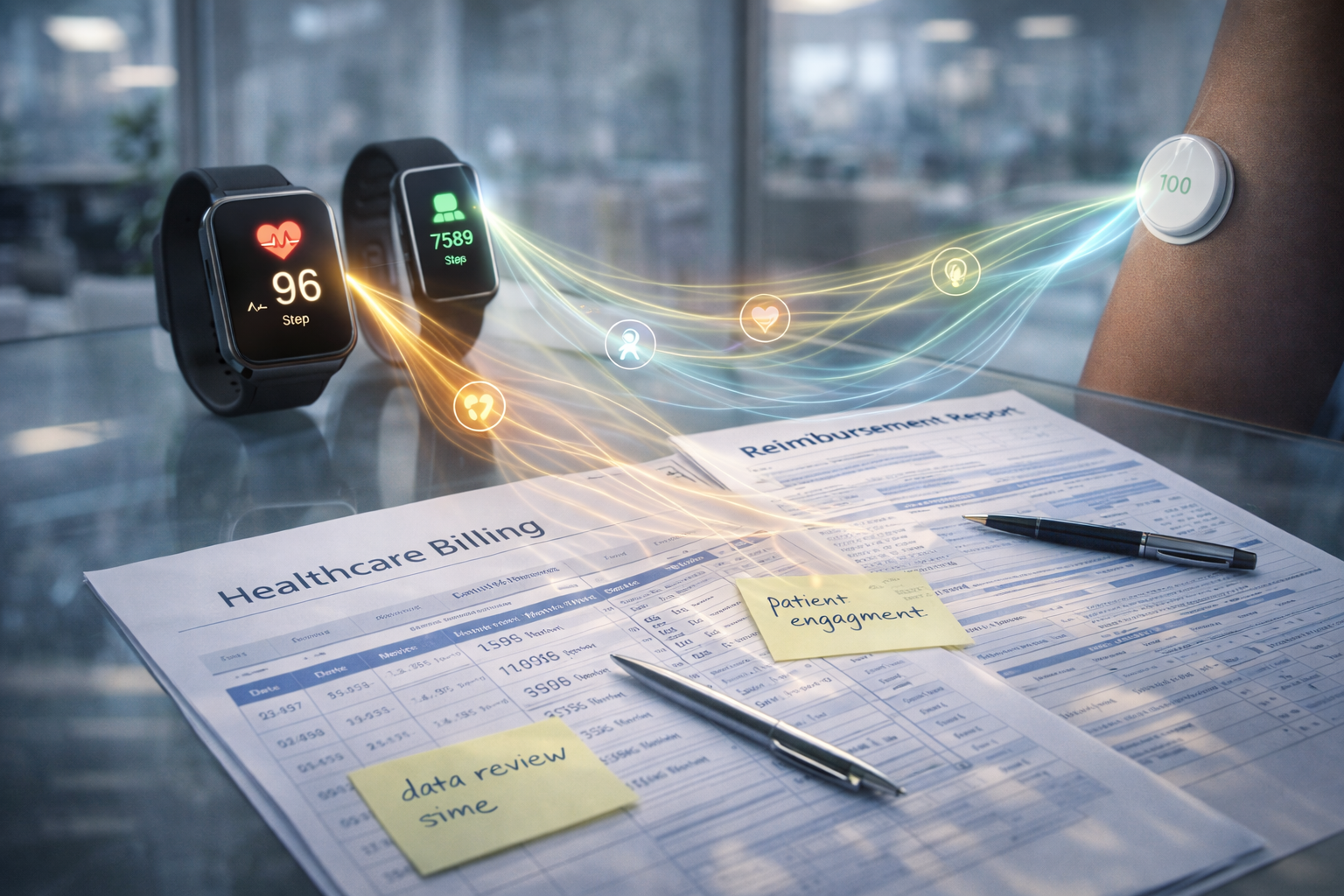
Imagine a hospital where a computer doesn’t just record what happened, but tells you what will happen. It predicts a septic shock event four hours before the first symptom appears. It forecasts a claim denial before the bill is even sent. This is no longer science fiction; it is the reality of predictive healthcare AI.
As we move further into 2025, the healthcare industry is undergoing a seismic shift. We are moving from a reactive model—treating the sick—to a proactive one, driven by healthcare forecasting tools that analyze the past to secure the future. But this power comes with profound responsibility. For clinicians, administrators, and health IT leaders, the rise of AI brings a “double-edged scalpel”: unparalleled efficiency on one side, and significant privacy and regulatory risks on the other.
What Predictive AI Means for Healthcare
At its core, predictive healthcare AI uses machine learning (ML) algorithms to analyze historical data—patient records, claims trends, demographic info—to forecast future outcomes. Unlike traditional analytics, which looks in the rearview mirror (descriptive analytics), predictive AI looks through the windshield.
It functions as a high-speed pattern recognition engine. By ingesting terabytes of data from Electronic Health Records (EHRs), wearables, and social determinants of health (SDOH), these models identify subtle correlations that the human brain might miss.
For a hospital administrator, this means knowing which weeks will see a surge in flu cases, allowing for better staffing. For a clinician, it means receiving a “risk score” that flags a patient’s high probability of readmission. However, the fuel for these predictions is sensitive patient data, making data privacy and governance the bedrock of any successful implementation.
Applications in Clinical + Revenue Cycle Settings
The magic of predictive AI lies in its versatility. It is currently revolutionizing two distinct but interconnected pillars of healthcare: clinical care and the revenue cycle.
Clinical Applications: Saving Lives with Data
In the clinical realm, predictive models act as an “early warning system.”
-
Sepsis Prediction: Sepsis is a rapid killer. AI tools now monitor vital signs in real-time, alerting nurses to deteriorating conditions hours before clinical signs are visible. This “lead time” allows for antibiotic intervention that can save lives.
-
Chronic Disease Management: By analyzing a patient’s history, AI can predict the progression of diseases like diabetes or heart failure. For example, algorithms can analyze retinal scans to predict cardiovascular risk, often more accurately than traditional blood tests.
-
Resource Allocation: Healthcare forecasting tools help hospitals predict bed occupancy rates. During peak seasons, this ensures that the Emergency Department (ED) doesn’t become a bottleneck, optimizing patient flow and reducing wait times.
Revenue Cycle Applications: Saving Bottom Lines
While clinical AI saves lives, revenue cycle AI saves hospitals. The financial health of a medical system is often precarious, with razor-thin margins.
-
Denial Prevention: One of the most potent uses is predicting claim denials. AI analyzes thousands of payer rules and historical adjudication data to flag claims before they are submitted. If a claim has a 90% probability of denial due to a missing modifier, the AI stops it, prompting a coder to fix it.
-
Prior Authorization: What used to take days of phone calls is now being automated. AI agents can predict the likelihood of prior auth approval and even auto-populate the necessary clinical documentation, reducing administrative burden by upwards of 40%.
-
Patient Financial Responsibility: AI models can estimate a patient’s “propensity to pay,” allowing financial counselors to offer tailored payment plans upfront, improving collection rates and the patient financial experience.
Read More: The Rise of AI in Healthcare: Smarter Triage and Faster Diagnoses
CMS Risk Adjustment and AI-Generated Predictions
Perhaps the most contentious and high-stakes arena for predictive AI is in CMS risk adjustment AI.
Medicare Advantage (MA) plans are paid based on the health status of their members. The sicker the patient (higher risk score), the higher the payment from the Centers for Medicare & Medicaid Services (CMS). This creates a powerful financial incentive to capture every diagnosis—a process AI is exceptionally good at.
The “Upcoding” Controversy
AI tools can scan unstructured doctor’s notes (Natural Language Processing) to suggest codes that a human coder might miss. While this ensures accuracy, it has also drawn the ire of regulators. CMS and the Office of Inspector General (OIG) are closely scrutinizing whether AI is being used to artificially inflate risk scores (“upcoding”) by suggesting conditions that aren’t actively being treated.
The 2025 Regulatory Landscape
Recent regulatory updates have tightened the leash.
-
RADV Audits: CMS has ramped up Risk Adjustment Data Validation (RADV) audits. In 2025, the focus is shifting toward “unsupported diagnoses.” If an AI tool suggests a code for “Major Depressive Disorder” based on a single historical mention, but there is no evidence of treatment in the current year, CMS will claw back those payments.
-
The “Two-Midnight” Rule & AI: New guidance clarifies that AI cannot be the sole arbiter of care decisions. For inpatient admissions, AI can support—but not replace—physician judgment. This is a direct response to fears that CMS risk adjustment AI tools were being tuned to aggressively deny necessary inpatient stays to save costs.
Read More: Regulatory Shifts in Medical Billing 2025: ICD-11, E/M Coding, Telehealth & What Providers Must Know
Ethical Limitations and Accuracy Risks
The adoption of predictive AI is not without its perils. “With great power comes great responsibility” is a cliché, but in healthcare, it is a legal mandate.
The “Black Box” of Bias
Algorithms are trained on historical data, and historical healthcare data is rife with bias. If an AI is trained on data where minority populations received less pain medication, the model may predict that minority patients need less medication. This “algorithmic bias” can automate inequality.
-
Case in Point: A widely used algorithm was found to assign lower risk scores to Black patients compared to white patients with the same health status, simply because Black patients historically incurred lower healthcare costs (due to lack of access, not lack of illness).
Hallucinations and Errors
Generative AI and predictive models can “hallucinate”—inventing facts or codes that don’t exist. In a clinical setting, an AI suggesting a non-existent drug interaction is dangerous. In a revenue cycle setting, an AI inventing a diagnosis code constitutes fraud.
The “Rubber Stamp” Risk
There is a growing risk of “automation bias,” where busy clinicians or coders blindly accept the AI’s recommendation without verification. If a CMS risk adjustment AI tool suggests a code and the coder clicks “approve” without checking the chart, the liability sits with the provider, not the software vendor.
Real-World Predictive AI Implementations
Despite the risks, leading health systems are proving that predictive AI works when governed correctly.
1. Banner Health & Revenue Cycle Optimization
Banner Health has been a pioneer in using AI to streamline operations. By partnering with AI-driven platforms, they implemented tools to automate insurance inquiries and denials management.
-
The Win: In pilot programs involving AI-driven appeals, success rates for overturning denials improved significantly (in some cases by over 30%), and the time to process these appeals dropped dramatically. This frees up staff to work on complex cases rather than sitting on hold with payers.
2. Mayo Clinic & Early Detection
Mayo Clinic has integrated predictive AI into cardiology. Their “eagle eye” algorithms can detect low ejection fraction (a sign of heart failure) from a standard ECG—something a human eye cannot do.
-
The Win: This allows for intervention months before a patient would typically show symptoms, shifting care from “sick care” to true “healthcare.”
3. Intermountain Health & Operational Efficiency
Intermountain has deployed “Copilots” and AI agents to assist with administrative burdens. By automating routine coding and documentation tasks, they have saved thousands of labor hours.
-
The Win: This reduces burnout among medical coders and clinicians, allowing them to focus on patient interaction rather than data entry.
Future Potential & Governance Needs
As we look toward 2026 and beyond, predictive healthcare AI will move from a “nice-to-have” to a “must-have.”
Emerging Trends
-
Digital Twins: We will soon see “digital twins” of hospitals—virtual replicas that use AI to simulate patient flow, staffing needs, and disaster responses before they happen in the real world.
-
Agentic AI: The next generation of AI won’t just suggest an action; it will perform it. Imagine an AI that not only predicts a denial but automatically drafts the appeal letter, attaches the medical record, and faxes it to the payer, waiting only for a human to sign off.
The Governance Imperative
To survive this transition, healthcare organizations must build “AI Governance Committees” that include clinicians, data scientists, and ethicists.
-
Validation is Key: You cannot deploy a model and forget it. Models experienced “drift”—they degrade over time as patient populations change. Continuous auditing of healthcare forecasting tools is essential.
-
Human-in-the-Loop: The Golden Rule of AI in healthcare remains: AI suggests, Human decides. Whether it’s diagnosing a tumor or coding a claim, the final accountability must rest with a qualified human professional.
Conclusion
Predictive AI offers a path to a more efficient, solvent, and effective healthcare system. It serves to find the needle in the haystack of medical data, saving lives and recovering lost revenue. However, as you hand over the keys to these powerful algorithms, let Care Medicus ensure you are not driving blind. By balancing innovation with rigorous governance and ethical oversight, we enable you to harness the power of prediction without losing the human touch. Contact Care Medicus today to secure the future of medicine.