




For decades, the promise of the Electronic Health Record (EHR) was simple: digitize the clipboard, streamline the workflow, and save the physician time. But for many healthcare providers, the reality has been quite different. Instead of saving time, legacy EHRs often demand hours of “pajama time”—late nights spent catching up on documentation after the clinic doors have closed.
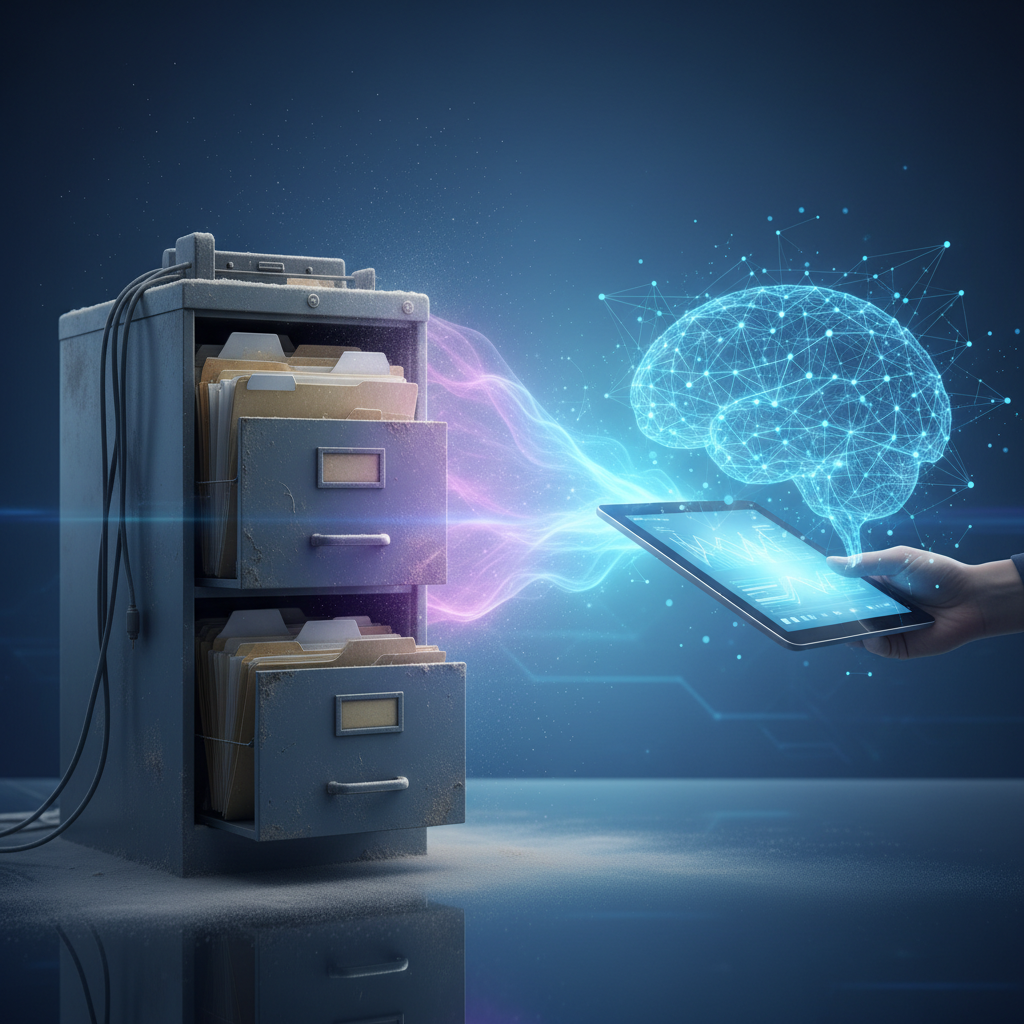
The narrative, however, is shifting. We are currently witnessing a transition from EHRs acting merely as digital filing cabinets to becoming active, intelligent partners in care delivery. This shift is driven by Artificial Intelligence.
Integrating AI in EHR systems is not just about a futuristic gloss on old software; it is a fundamental re-architecture of how medical data is captured, processed, and utilized. By automating the drudgery of data entry and surfacing critical clinical insights, AI is finally delivering on the original promise of digital health. But how does it actually work under the hood? How does an algorithm distinguish between a casual comment and a clinical diagnosis, and how does it do so while keeping patient data lock-tight secure?
This guide explores the mechanics of AI integration, from the natural language processing that powers smart scribes to the predictive models that safeguard revenue cycles.
How is AI integrated into EHR architecture?
API-first connectivity and native builds
Artificial intelligence doesn’t just “sit” on top of an EHR like a sticker. For it to be effective, it must be deeply woven into the clinical workflow. There are generally two ways AI finds its home within these massive software ecosystems: native integration and API-based extensions.
Native integration occurs when major EHR vendors (like Epic, Oracle Cerner, or MEDITECH) build AI models directly into their source code. These are often proprietary algorithms designed to look and feel exactly like the rest of the interface. The benefit here is seamlessness; the user experience is consistent, and the data doesn’t need to leave the system’s internal walled garden.
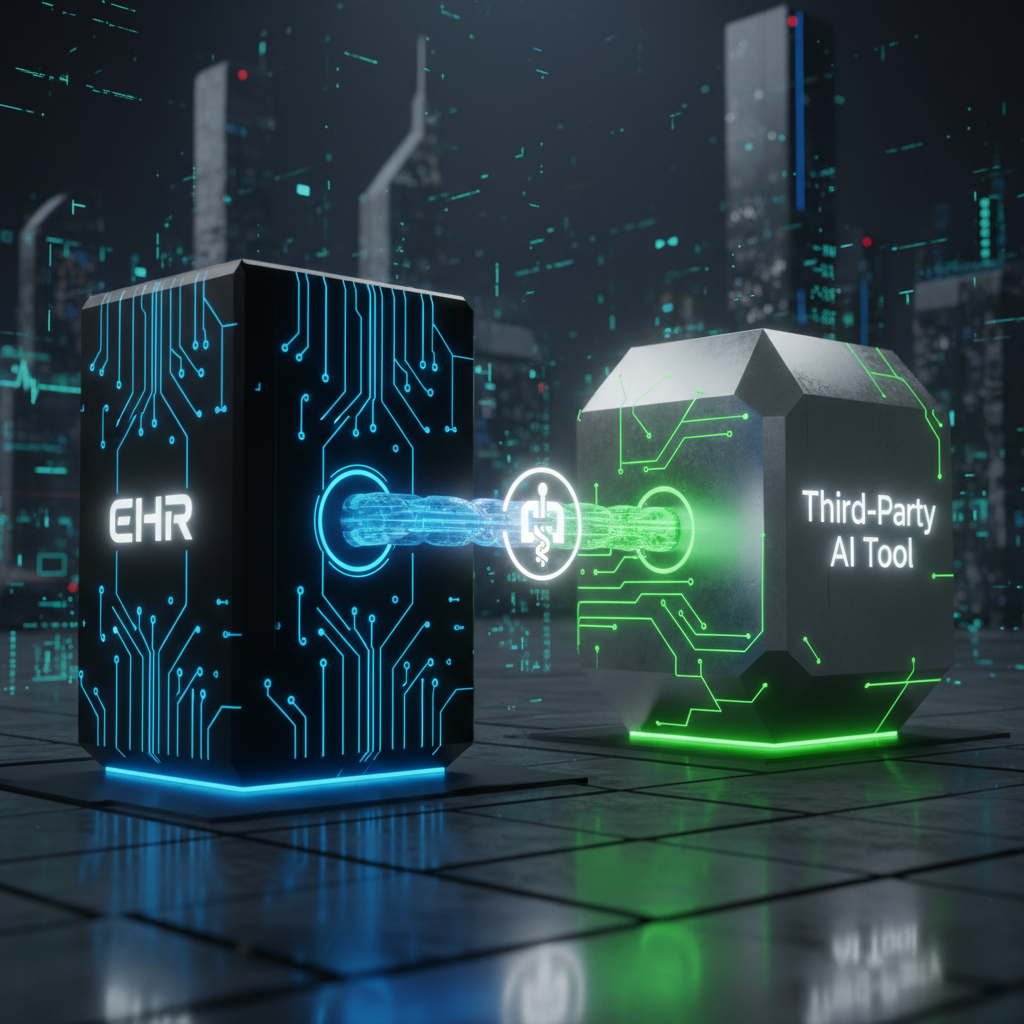
However, the rapid pace of AI innovation often outstrips the development cycles of massive legacy platforms. This is where API (Application Programming Interface) integration becomes critical. Third-party innovators build specialized AI tools—like ambient listening apps or specialized radiology readers—that “plug in” to the EHR via standards like FHIR (Fast Healthcare Interoperability Resources).
Through these secure gateways, the EHR sends raw data (like a patient’s medication list) to the AI engine. The AI processes it and sends back actionable intelligence (like a warning about a drug interaction), often in milliseconds.
Smart Coding & Documentation Suggestions
The most visible application of AI in EHR systems helps solve the biggest pain point: documentation. The traditional method required physicians to type narrative notes or click through endless drop-down menus. AI changes this dynamic through Natural Language Processing (NLP).
How does EHR documentation AI work?
It translates human conversation into structured data.
Old iterations of dictation software were simple speech-to-text tools. They acted like typewriters that listened. Modern EHR documentation AI is different; it acts like a medical resident that listens, understands, and summarizes.
Here is the step-by-step workflow of an AI-enabled documentation assistant:
- Ambient Listening: Using a smartphone or room microphone, the AI captures the audio of the patient-provider conversation in real-time.
- Diarization: The algorithm separates the speakers, distinguishing between the doctor, the patient, and perhaps a family member.
- Concept Extraction: This is the “brain” of the operation. The NLP engine scans the transcript for medical concepts. If the patient says, “My chest hurts when I run,” the AI maps this to clinical terminology (e.g., “exertional chest pain”).
- Structured Output: Finally, the AI places these concepts into the correct fields in the EHR—History of Present Illness (HPI), Review of Systems (ROS), and Assessment & Plan.
Automated medical coding
Beyond writing the note, AI assists in the complex world of medical coding (ICD-10 and CPT codes). An AI model trained on millions of past charts can analyze a clinical note and suggest the appropriate billing codes.
For example, if a physician documents “Type 2 Diabetes with kidney complications,” the AI suggests the specific code E11.21. This reduces the cognitive load on providers who are not professional coders and ensures that the complexity of the patient’s condition is accurately captured.
Read More: Telehealth Billing & Reimbursement: A Point of Attention for Healthcare Providers
HIPAA + Data Flow Considerations
When introducing an external intelligence to handle sensitive Patient Health Information (PHI), security is the primary directive. Healthcare leaders often ask: Does our data train the public model? and Is the data secure in transit?
How does AI maintain HIPAA compliance?
Through de-identification and secure, segregated processing environments.
When an EHR sends data to an AI model, it typically passes through a “scrubbing” layer first. This process removes Direct Identifiers (names, SSNs, phone numbers) and often Indirect Identifiers (dates of admission, zip codes) depending on the use case.
Furthermore, enterprise-grade AI in healthcare operates differently than consumer tools like ChatGPT. In a consumer model, your inputs might be used to retrain the model for everyone else. In a HIPAA-compliant enterprise environment, data isolation is standard.
- Zero-Retention Policies: Many ambient AI tools process the audio of a visit to generate a note and then immediately delete the audio file. The data exists only long enough to perform the function.
- Encryption: Data is encrypted both “at rest” (when stored on a server) and “in transit” (moving from the EHR to the AI cloud and back).
- BAAs (Business Associate Agreements): Any third-party AI vendor must sign a BAA, legally binding them to the same strict security standards as the hospital itself.
Read More: Security, Fraud Prevention & Compliance in Healthcare: Key Priorities for Medical Billing Systems
Impact on Billing & Audit Readiness
Revenue Cycle Management (RCM) is the financial backbone of any healthcare organization. Errors here lead to claim denials, delayed payments, and costly audits. AI acts as a sophisticated safety net for billing workflows.
Reducing claim denials with predictive auditing
Traditional billing workflows are reactive: a claim is submitted, denied by the payer, and then reworked by the staff. AI shifts this to a proactive workflow.
Before a claim is ever sent to an insurance payer, AI algorithms review the chart against millions of payer rules. It looks for common errors, such as:
- Mismatched codes: Does the diagnosis code support the procedure code?
- Missing documentation: Did the doctor bill for a high-complexity visit but fail to document a comprehensive exam?
- Prior authorization checks: Does this specific insurer require pre-approval for this specific MRI?
If the AI detects a high probability of denial, it flags the claim for human review before submission. This significantly reduces the “days in accounts receivable” (A/R) and improves cash flow.
Audit readiness and compliance
In the event of an audit, clarity is king. AI helps ensure that clinical documentation supports the level of service billed. By suggesting the correct specificity in documentation (e.g., prompting a doctor to specify which side of the body a symptom is on), AI creates a robust audit trail that validates the care provided.
Real EHR Use Cases
While the technology sounds theoretical, it is actively running in thousands of clinics today. Here are three distinct ways AI is reshaping the EHR experience right now.
1. The “Invisible” Scribe
Dr. Aris, a primary care physician, walks into an exam room. She hits “record” on her mobile EHR app. She makes eye contact with her patient, discussing their hypertension and recent diet changes. She takes no notes. When she leaves the room three minutes later, a complete SOAP note—formatted, coded, and ready for signature—is waiting in her desktop EHR. This is Ambient Clinical Intelligence in action, reducing documentation time by up to 50% for many providers.
2. The Inbox Triage Assistant
A typical physician’s inbox is flooded with refill requests, lab results, and patient messages. AI algorithms can now analyze incoming messages and draft responses or route them appropriately.
- Routine Refill: The AI checks the patient’s last visit date and lab results. If everything is within protocol, it tees up the refill order for the doctor to sign with one click.
- Symptom Complaint: If a patient messages about “chest pain,” the AI prioritizes this message to the top of the queue and flags it for the on-call nurse immediately.
3. Predictive Scheduling
No-shows are a massive drain on practice resources. AI models analyze patient history, weather patterns, traffic data, and appointment types to predict which patients are likely to miss their appointments. The system can then automatically send personalized reminders or double-book that specific slot to ensure the provider’s time is utilized efficiently.
Future of Intelligent EHR Automation
We are currently in the early adoption phase of AI in EHR systems. The current tools are largely reactive or assistive—they help write notes or check codes. The next generation of EHR AI will be predictive and transformative.
Precision Medicine at Scale
Future EHRs will not just record what happened; they will predict what will happen. By analyzing a patient’s genetic markers alongside their clinical history and social determinants of health, the EHR will prompt physicians with highly personalized treatment paths.
Imagine an EHR that doesn’t just alert you to a drug allergy, but suggests, “Based on this patient’s genomic profile, Drug A will be 40% more effective than Drug B.”
Population Health Management
AI will allow systems to zoom out from the individual patient to the entire community. EHRs will automatically scan patient populations to identify at-risk cohorts—such as patients with diabetes who haven’t had an eye exam in 12 months—and automate outreach campaigns to close those care gaps.

From Data Repository to Care Partner
At Care Medicus, we believe the era of the EHR as a passive data repository is coming to an end. Today’s most advanced healthcare organizations are transforming their EHRs into intelligent partners—powered by natural language processing, predictive analytics, and automated coding—to actively support care delivery and operational efficiency.
The question is no longer whether to adopt AI, but how quickly organizations can implement it to support a workforce strained by documentation burden and burnout. When leaders understand how these systems listen, learn, protect data, and integrate into existing workflows, technology shifts from being an obstacle to becoming a solution.
Now is the time to act. By strategically integrating AI into the EHR, healthcare organizations can reduce administrative load, improve accuracy, and empower clinicians to focus on what matters most—patient care. Partner with Care Medicus to turn your EHR into a smarter, more responsive platform that drives efficiency, restores clinician satisfaction, and positions your organization for the future of intelligent healthcare.
Leave a Reply